Today, in many countries in the world, is a day to celebrate fathers. I just thought I should share a little something for fathers.
Sunday, June 20, 2010


Monday, May 31, 2010
What I Like About the Earth: Part 12, Pothos Ivy
One of my favorite house plants is something called Pothos Ivy, also called Golden Pothos or Epipremnum aureum. It is a simple plant that can handle a significant amount of abuse.I have one growing in my apartment right now, and it seems intent on taking over the world. While it is best if the plant is put in soil, that is not necessary as it can grow just fine hydroponically. As a matter of fact I found my current pothos ivy on the hill behind my apartment building where someone had cast it out complete with the original potting soil. I pulled up several strands of it and brought it back to my apartment and stuck it in a jar with water. It put down roots in the water and began to make new leaves apparently puttling everything it needed from the air. I eventually got a pot with some soil for it and it has been growing just fine ever since.
 One thing that many people may not realize about this common house plant it that it can grow quite large and the leaves can get as large as 30 cm (12 in.) across. Here is a picture of another pothos plant that I saw at the NC Zoo.

It's growing all over the tree in the center of the picture. Here are some other pictures for scale.


Compare that with the size of the typical house plant (same pen).


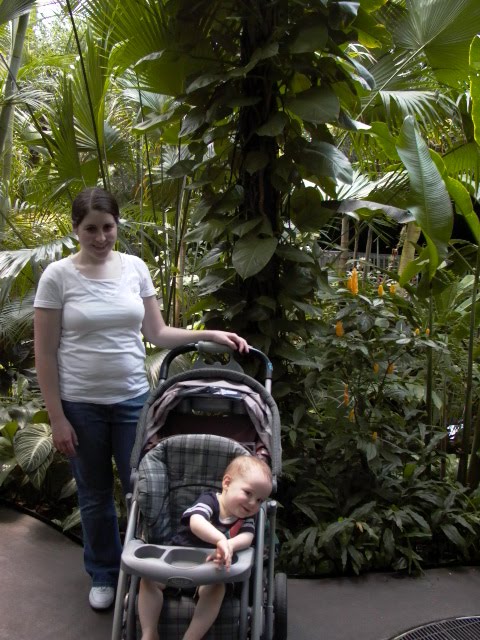
It's growing all over the tree in the center of the picture. Here are some other pictures for scale.


Compare that with the size of the typical house plant (same pen).

Sunday, May 30, 2010
Warning Signs at the NC Zoo


Saturday, May 29, 2010
Book of Mormon Place Names in New York?
There is a theory out there about how Joseph Smith came up with some of the place names in the Book of Mormon by copying (and changing slightly) a few town names from around where he lived in New York. I have heard this theory mentioned a few times but I have never had anyone actually offer a list of the names in the Book of Mormon and the corresponding place names in New York, that is until I happened to be reading some of the comments posted by readers after an opinion piece in The Deseret News.
There was one comment that mentioned this theory and actually offered a list of corresponding names in the Book of Mormon and the supposed town name in New York that it was derived from. This got me interested so I started looking up some of the names on the list (the New York list) to see where they came from. It very quickly turned into a very amusing search. Here is what I found.
First the list:
Book of Mormon place name: New York place name
Alma : Alma Mounatin [sic]
Angola : Angola
Antum : Antum
Anti-Anti : Antioch
Boaz : Boaz
Comner : Conner
Ephraim : Ephrem
Helam : Hellam
Jacobugath : Jacobsburg
Jerusalem : Jerusalem
Jordan : Jordan
Kishkumen : Kishkimineta
Lehi : Lehigh
Manti : Mantua
Moroni : Monroe
Minon : Minoa
Morianton : Moraviantown
Moron : Morin
Noah : Land of Noah Lakes
Onidah : Oneida
Onidah : Hill Oneida Castle
Omner : Omer
Ramah : Rama
Ripliancum waters : Ripple Lake
Sidom : Sodom
Shilom : Shiloh
Land of Midian : Land of Midian
Teancum : Tenecum
Of the 345 proper nouns (place names, personal names etc.) in the Book of Mormon, this guy could only come up with 28 that might be derived from place names near by to where Joseph Smith grew up (though he does throw out the rather weak "Here are just a few examples" but let's play along and look at his "few examples"). Granted the 345 number includes names such as: Sam, Jerusalem, Sarah, Babylon, Eve and many more, but even if we account for those names there are still ~200 unique proper nouns in the Book of Mormon. Even still, the list provided by this guy includes nine biblical names that Joseph Smith would not need to copy from nearby place names in order to "make them up". Of these nine names we can eliminate five of them (Boaz, Jerusalem, Jordan, Noah and Land of Midian), because there is no difference (or very little difference) between the Book of Mormon name and the corresponding "New York" name. I am keeping the rest of them because the names are either spelled different, or are different enough that they warrant looking into.
So let us look at what we have so far. The basis of the theory is that Joseph Smith derived place names in the Book of Mormon from the names of towns or other places around where he grew up in New York. Only 28 names are offered as being candidates for copying by Joseph Smith. This leaves 317 names that need to come from some place else. If we eliminate biblical names that leaves us with 23 (19) on his list and ~200 names in the Book of Mormon (with the four interesting names that I will address). The man posting this list did not offer any verification, source or explanation. He just ended with, "If one were to calculate the odds of this just being a coincidence, it would be astronomical." So let us look into these "astronomical odds". First I should mention that the Book of Mormon was published in 1829.
Starting at the top of the list:
Alma : Alma Mounatin [sic]
There is a place called Alma Mountain (or more commonly called Alma Hill) in Allegany County in New York. The hill is associated with the nearby town of the same name. It is not clear which one was named first, the hill or the town, but in any event the area was first settled in 1833 and the town was officially named in 1854. Prior to 1854 the area was associated with the town of Willing.
OK this is not starting out so good. The place now called Alma, New York which is in the general vicinity of Palmyra, New York (only about 100 miles away), was settled in 1833, about four years after the Book of Mormon was published. It may not have been named Alma until 1854. But let us continue and maybe our guy will be lucky.
Angola : Angola
From Wikipedia, "The community was previously called "Evans Station." In 1854 or 1855, a post office was established there, bearing the name Angola. The first postmaster was John H. Andrus, who later became county clerk. At this time, the community's name was changed to "Angola." The new name was apparently chosen because, at that time, local residents (primarily Quakers) were supporting missionary efforts in the Portuguese colony of Angola in Africa."
This is not looking so good for this theory. Perhaps we should continue.
Antum : Antum
I could not find a location named Antum in New York (or Pennsylvania either). Perhaps a more though historical place name search is needed, but based on the previous two examples it may not be worth it.
Anti-Anti : Antioch
Antioch is a well known biblical name (and one of the four that I chose to keep from the nine biblical names) so it would not be surprising that it would show up, except for one thing, Antioch does not appear in the BoM. The proposed corresponding name to Antioch is Anti-Anti, which also does not appear in the BoM, though there is an Ani-Anti (along with Antiomno, Antion, Antionah, Antionum, Antiparah, Antipas and Antipus). But let us look for Antioch anyway. I was able to find several churches in New York City named after Antioch, but no town or hill or place name.
Comner : Conner
Try as I might, I could not find a Conner, New York. (also, there is no Comner in the BoM, but there in a Comnor).
Ephraim : Ephrem
Here is another overtly biblical name, but still let us look for Ephrem, New York.... and nothing.
Helam : Hellam
I could not find a Hellam, NY but there was a Hellam, PA which might be a possibility. It was named in the 1700's so it might just work. But it is quite a ways away from Palmyra (it is in southern Pennsylvania), which is central to the original theory, that ALL BoM names came from place names close to Palmyra.
Jacobugath : Jacobsburg
I could not find a Jacobsburg, NY but there was a Jacobsburg, OH.
Kishkumen : Kishkimineta
This was my favorite, because the only place Kishkimineta turned up in a Google search was in this guy's comment on the Deseret News site. And now that I have a post including it, this post will eventually turn up in a Google search about Kishkimineta. Kishkimineta. Just messing with the Google robot. Kishkimineta. I bet if I include Kishkimineta enough times in this post I can make this post higher rated in the Google search returns than the original comment. Kishkimineta.
Kishkimineta.
Lehi : Lehigh
Yes there is a Lehigh, NY. Could not find any information about it. It is closer to Palmyra than previous towns found in NY. No information as to when it was named. I'll put this down as a definite unverified maybe. Kishkimineta.
Manti : Mantua
There is a city in Italy named Mantua. Couldn't find a place in NY by that name.
Moroni : Monroe
There is a town named Monroe in NY, and it was named in 1818! So far this is the best candiatate. Still you have to get Moroni from Monroe...Kishkimineta.
Minon : Minoa
This is GREAT! There is a town named Minoa in New York. Perfect... OK, looking, looking, Oh! the official town website. Seems like a nice place. OK let's find out the history of Minoa. From the town website:
"Did you know that from the first settlers here in the early 1800's, this was called Manlius Station? It is told that in 1895 Dr. Arthur B. Rood (a physician in town in the late 1800's until 1914) was tired of having his mail ending up in Manlius, Manlius Center, North Manlius, Manlius Four Corners, and the Town of Manlius, that he decided a name change was the answer and was instrumental in the renaming of our village, Minoa."
Hmmmm....1895. Not good. Kishkimineta.
Morianton : Moraviantown
I could not find a Moraviantown, but there is a Moravia, NY. From Wikipedia, "The first settlers arrived around 1789, while the natives still lived in the area. The town was formed in 1833 from the Town of Sempronius." (Fun fact!: The town of Moravia was the boyhood home of Millard Fillmore, John D. Rockefeller and John Wood.)
Moron : Morin
Could not find a Morin, NY.
Onidah : Oneida
There is an Indian tribe called the Oneida. And there is a town in New York called Oneida, which got its name from the Oneida community, which was founded in 1848, four years after Joseph Smith died. The best bet here is the Indian tribe (see below)
Onidah Hill : Oneida Castle
Oneida Castle was the last location of the independent Oneida tribe. It is located just east of the city of Oneida, and was probably the inspiration for the name of the community and city. So far this is the best candidate (even better than Monroe).
Omner : Omer
I can't find an Omer, NY, but omer is a biblical term (though not too common).
Ramah : Rama
I couldn't find a Rama, NY (but plenty of Sport-o-rama, Disc-o-rama, Wood-o-rama, Groom-o-rama and Sign-a-rama's). Rama is a Hindu deity, but not very likely an influence on Joseph Smith. Kishkimineta.
Ripliancum (waters) : Ripple Lake
I found a Ripple Lake in Minnasota, Texas and Massachusetts, but not New York.
Sidom : Sodom
Sodom is a well known place name in the bible (and not associated with the best things) so I was supprised when I actually found a Sodom, NY. Though I couldn't find much else.
Shilom : Shiloh
Shiloh is another biblical name, which if Joseph Smith was making up names he would not need to borrow this name from a nearby town. As it is, I can't find a Shiloh, NY.
Teancum : Tenecum
On this one I looked long and deep. Still I could not find a Tenecum, NY. Apparently there was a Dutch colony of the same name in modern day Pennsylvania, but it seems to have been renamed when taken over by the British. There is still a creek and an island of the same name in PA.
So let us recap. Of the 28 names offered, we eliminated five because of their prominent biblical source, and we can assume that Joseph Smith did not need any inspiration from local towns named after those five (for those that are interested, the five are Boaz, Jerusalem, Jordan, Noah and Midian. Jerusalem and Jordan, not surprisingly, are towns in New York the other three are not). This leaves us with 23 possibilities from the list. Of those, nine were found to be actual places in New York, 14 were not. Of the nine that were found five of them were named after the Book of Mormon was published, two of them the date of their naming was uncertain and the remaining two are possible candidates for this theory. These include Monroe and Oneida Castle (I am excluding the city of Oneida, because that was named for the Oneida Community founded in 1848).
To be more thorough we would have to look at the historical place names and find out what they were called back in the 1820's to make sure, but given the verified parts of the list it may not be a particularly rewarding exercise. Even if some of the 14 unknown "town" names did prove to be historical town names around Palmyra in the 1820's, this still leaves more than 150 names in the Book of Mormon that need to be accounted for under this theory. While at first this theory may appear to be very persuasive, it steadily gets more and more ridiculous the more "pesky" facts keep intruding on the scene.
Kishkimineta.
There was one comment that mentioned this theory and actually offered a list of corresponding names in the Book of Mormon and the supposed town name in New York that it was derived from. This got me interested so I started looking up some of the names on the list (the New York list) to see where they came from. It very quickly turned into a very amusing search. Here is what I found.
First the list:
Book of Mormon place name: New York place name
Alma : Alma Mounatin [sic]
Angola : Angola
Antum : Antum
Anti-Anti : Antioch
Boaz : Boaz
Comner : Conner
Ephraim : Ephrem
Helam : Hellam
Jacobugath : Jacobsburg
Jerusalem : Jerusalem
Jordan : Jordan
Kishkumen : Kishkimineta
Lehi : Lehigh
Manti : Mantua
Moroni : Monroe
Minon : Minoa
Morianton : Moraviantown
Moron : Morin
Noah : Land of Noah Lakes
Onidah : Oneida
Onidah : Hill Oneida Castle
Omner : Omer
Ramah : Rama
Ripliancum waters : Ripple Lake
Sidom : Sodom
Shilom : Shiloh
Land of Midian : Land of Midian
Teancum : Tenecum
Of the 345 proper nouns (place names, personal names etc.) in the Book of Mormon, this guy could only come up with 28 that might be derived from place names near by to where Joseph Smith grew up (though he does throw out the rather weak "Here are just a few examples" but let's play along and look at his "few examples"). Granted the 345 number includes names such as: Sam, Jerusalem, Sarah, Babylon, Eve and many more, but even if we account for those names there are still ~200 unique proper nouns in the Book of Mormon. Even still, the list provided by this guy includes nine biblical names that Joseph Smith would not need to copy from nearby place names in order to "make them up". Of these nine names we can eliminate five of them (Boaz, Jerusalem, Jordan, Noah and Land of Midian), because there is no difference (or very little difference) between the Book of Mormon name and the corresponding "New York" name. I am keeping the rest of them because the names are either spelled different, or are different enough that they warrant looking into.
So let us look at what we have so far. The basis of the theory is that Joseph Smith derived place names in the Book of Mormon from the names of towns or other places around where he grew up in New York. Only 28 names are offered as being candidates for copying by Joseph Smith. This leaves 317 names that need to come from some place else. If we eliminate biblical names that leaves us with 23 (19) on his list and ~200 names in the Book of Mormon (with the four interesting names that I will address). The man posting this list did not offer any verification, source or explanation. He just ended with, "If one were to calculate the odds of this just being a coincidence, it would be astronomical." So let us look into these "astronomical odds". First I should mention that the Book of Mormon was published in 1829.
Starting at the top of the list:
Alma : Alma Mounatin [sic]
There is a place called Alma Mountain (or more commonly called Alma Hill) in Allegany County in New York. The hill is associated with the nearby town of the same name. It is not clear which one was named first, the hill or the town, but in any event the area was first settled in 1833 and the town was officially named in 1854. Prior to 1854 the area was associated with the town of Willing.
OK this is not starting out so good. The place now called Alma, New York which is in the general vicinity of Palmyra, New York (only about 100 miles away), was settled in 1833, about four years after the Book of Mormon was published. It may not have been named Alma until 1854. But let us continue and maybe our guy will be lucky.
Angola : Angola
From Wikipedia, "The community was previously called "Evans Station." In 1854 or 1855, a post office was established there, bearing the name Angola. The first postmaster was John H. Andrus, who later became county clerk. At this time, the community's name was changed to "Angola." The new name was apparently chosen because, at that time, local residents (primarily Quakers) were supporting missionary efforts in the Portuguese colony of Angola in Africa."
This is not looking so good for this theory. Perhaps we should continue.
Antum : Antum
I could not find a location named Antum in New York (or Pennsylvania either). Perhaps a more though historical place name search is needed, but based on the previous two examples it may not be worth it.
Anti-Anti : Antioch
Antioch is a well known biblical name (and one of the four that I chose to keep from the nine biblical names) so it would not be surprising that it would show up, except for one thing, Antioch does not appear in the BoM. The proposed corresponding name to Antioch is Anti-Anti, which also does not appear in the BoM, though there is an Ani-Anti (along with Antiomno, Antion, Antionah, Antionum, Antiparah, Antipas and Antipus). But let us look for Antioch anyway. I was able to find several churches in New York City named after Antioch, but no town or hill or place name.
Comner : Conner
Try as I might, I could not find a Conner, New York. (also, there is no Comner in the BoM, but there in a Comnor).
Ephraim : Ephrem
Here is another overtly biblical name, but still let us look for Ephrem, New York.... and nothing.
Helam : Hellam
I could not find a Hellam, NY but there was a Hellam, PA which might be a possibility. It was named in the 1700's so it might just work. But it is quite a ways away from Palmyra (it is in southern Pennsylvania), which is central to the original theory, that ALL BoM names came from place names close to Palmyra.
Jacobugath : Jacobsburg
I could not find a Jacobsburg, NY but there was a Jacobsburg, OH.
Kishkumen : Kishkimineta
This was my favorite, because the only place Kishkimineta turned up in a Google search was in this guy's comment on the Deseret News site. And now that I have a post including it, this post will eventually turn up in a Google search about Kishkimineta. Kishkimineta. Just messing with the Google robot. Kishkimineta. I bet if I include Kishkimineta enough times in this post I can make this post higher rated in the Google search returns than the original comment. Kishkimineta.
Kishkimineta.
Lehi : Lehigh
Yes there is a Lehigh, NY. Could not find any information about it. It is closer to Palmyra than previous towns found in NY. No information as to when it was named. I'll put this down as a definite unverified maybe. Kishkimineta.
Manti : Mantua
There is a city in Italy named Mantua. Couldn't find a place in NY by that name.
Moroni : Monroe
There is a town named Monroe in NY, and it was named in 1818! So far this is the best candiatate. Still you have to get Moroni from Monroe...Kishkimineta.
Minon : Minoa
This is GREAT! There is a town named Minoa in New York. Perfect... OK, looking, looking, Oh! the official town website. Seems like a nice place. OK let's find out the history of Minoa. From the town website:
"Did you know that from the first settlers here in the early 1800's, this was called Manlius Station? It is told that in 1895 Dr. Arthur B. Rood (a physician in town in the late 1800's until 1914) was tired of having his mail ending up in Manlius, Manlius Center, North Manlius, Manlius Four Corners, and the Town of Manlius, that he decided a name change was the answer and was instrumental in the renaming of our village, Minoa."
Hmmmm....1895. Not good. Kishkimineta.
Morianton : Moraviantown
I could not find a Moraviantown, but there is a Moravia, NY. From Wikipedia, "The first settlers arrived around 1789, while the natives still lived in the area. The town was formed in 1833 from the Town of Sempronius." (Fun fact!: The town of Moravia was the boyhood home of Millard Fillmore, John D. Rockefeller and John Wood.)
Moron : Morin
Could not find a Morin, NY.
Onidah : Oneida
There is an Indian tribe called the Oneida. And there is a town in New York called Oneida, which got its name from the Oneida community, which was founded in 1848, four years after Joseph Smith died. The best bet here is the Indian tribe (see below)
Onidah Hill : Oneida Castle
Oneida Castle was the last location of the independent Oneida tribe. It is located just east of the city of Oneida, and was probably the inspiration for the name of the community and city. So far this is the best candidate (even better than Monroe).
Omner : Omer
I can't find an Omer, NY, but omer is a biblical term (though not too common).
Ramah : Rama
I couldn't find a Rama, NY (but plenty of Sport-o-rama, Disc-o-rama, Wood-o-rama, Groom-o-rama and Sign-a-rama's). Rama is a Hindu deity, but not very likely an influence on Joseph Smith. Kishkimineta.
Ripliancum (waters) : Ripple Lake
I found a Ripple Lake in Minnasota, Texas and Massachusetts, but not New York.
Sidom : Sodom
Sodom is a well known place name in the bible (and not associated with the best things) so I was supprised when I actually found a Sodom, NY. Though I couldn't find much else.
Shilom : Shiloh
Shiloh is another biblical name, which if Joseph Smith was making up names he would not need to borrow this name from a nearby town. As it is, I can't find a Shiloh, NY.
Teancum : Tenecum
On this one I looked long and deep. Still I could not find a Tenecum, NY. Apparently there was a Dutch colony of the same name in modern day Pennsylvania, but it seems to have been renamed when taken over by the British. There is still a creek and an island of the same name in PA.
So let us recap. Of the 28 names offered, we eliminated five because of their prominent biblical source, and we can assume that Joseph Smith did not need any inspiration from local towns named after those five (for those that are interested, the five are Boaz, Jerusalem, Jordan, Noah and Midian. Jerusalem and Jordan, not surprisingly, are towns in New York the other three are not). This leaves us with 23 possibilities from the list. Of those, nine were found to be actual places in New York, 14 were not. Of the nine that were found five of them were named after the Book of Mormon was published, two of them the date of their naming was uncertain and the remaining two are possible candidates for this theory. These include Monroe and Oneida Castle (I am excluding the city of Oneida, because that was named for the Oneida Community founded in 1848).
To be more thorough we would have to look at the historical place names and find out what they were called back in the 1820's to make sure, but given the verified parts of the list it may not be a particularly rewarding exercise. Even if some of the 14 unknown "town" names did prove to be historical town names around Palmyra in the 1820's, this still leaves more than 150 names in the Book of Mormon that need to be accounted for under this theory. While at first this theory may appear to be very persuasive, it steadily gets more and more ridiculous the more "pesky" facts keep intruding on the scene.
Kishkimineta.
Sunday, May 23, 2010
My Qualifying Exam
I passed my qualifying exam. I actually took it two weeks ago but I just found out today that I passed it. I have a much longer explanation of the qual over at The Eternal Universe, but I just wanted to say something here that I did not mention there.
When I was preparing for the qual I was wondering what I should do to focus my studying. It was something that I was praying about and thinking about a lot. There are so many things I could study and look at that it would not be possible to look at them all, so I had the be selective in the things that I studied. As I was praying about this I got the impression that I should focus on the statistical mechanics portion of a book containing old qualifier problems from the University of Chicago. So I went to that portion of the Chicago book and looked it over and selected the problems that I thought could turn up on the test (I selected 17 of the 22 problems) and worked them out. As it turned out two of those questions turned up on the qualifying exam, and I was able to answer them easily.
The test was also spread over two days. Initially it was scheduled to be on Sunday and Monday the 9th and 10th of May, but the department secretary pointed out that Commencement was that Sunday and there would be several people in the building making noise and it would be hard to reserve a room. This prompted the chair of the qualifying committee to propose moving the first day of testing to Friday the 7th. I sent an email to him saying I would much prefer moving it to the Friday, so it was moved from Sunday to Friday.
Also, I was preparing for the test by studying with two other people, who were also taking the astronomy test like me. We had looked at many different things and we were finalizing our last minute studying. We had two tests on the Friday and four on Monday. So we planned to spend Saturday studying for the first two tests (stat mech and quantum) and then they wanted to spend Sunday studying for stars and high energy. I decided that even though it would help to study for stars and high energy some more as those were the two that I had not studied as much, it would be better for me to keep the sabbath and not to study. So I studied with them on Saturday and then on Sunday I went to church, had our home teachers come by and spent the day "resting" (i.e. worrying about my tests the next day). But when it came time for the tests, it turned out that everything that I was able to answer on the tests was stuff that I had already studied, or already knew, and thus it turned out that if I had studied on Sunday then that would not have helped me any on the two tests. It was such a good feeling to see a blessing of keeping the sabbath.
When I was preparing for the qual I was wondering what I should do to focus my studying. It was something that I was praying about and thinking about a lot. There are so many things I could study and look at that it would not be possible to look at them all, so I had the be selective in the things that I studied. As I was praying about this I got the impression that I should focus on the statistical mechanics portion of a book containing old qualifier problems from the University of Chicago. So I went to that portion of the Chicago book and looked it over and selected the problems that I thought could turn up on the test (I selected 17 of the 22 problems) and worked them out. As it turned out two of those questions turned up on the qualifying exam, and I was able to answer them easily.
The test was also spread over two days. Initially it was scheduled to be on Sunday and Monday the 9th and 10th of May, but the department secretary pointed out that Commencement was that Sunday and there would be several people in the building making noise and it would be hard to reserve a room. This prompted the chair of the qualifying committee to propose moving the first day of testing to Friday the 7th. I sent an email to him saying I would much prefer moving it to the Friday, so it was moved from Sunday to Friday.
Also, I was preparing for the test by studying with two other people, who were also taking the astronomy test like me. We had looked at many different things and we were finalizing our last minute studying. We had two tests on the Friday and four on Monday. So we planned to spend Saturday studying for the first two tests (stat mech and quantum) and then they wanted to spend Sunday studying for stars and high energy. I decided that even though it would help to study for stars and high energy some more as those were the two that I had not studied as much, it would be better for me to keep the sabbath and not to study. So I studied with them on Saturday and then on Sunday I went to church, had our home teachers come by and spent the day "resting" (i.e. worrying about my tests the next day). But when it came time for the tests, it turned out that everything that I was able to answer on the tests was stuff that I had already studied, or already knew, and thus it turned out that if I had studied on Sunday then that would not have helped me any on the two tests. It was such a good feeling to see a blessing of keeping the sabbath.
Tuesday, April 20, 2010
Failing (Second) Marriages?
The other day I was reading a story and one woman in the story expressed the thought that there was no point in getting married a second time because "The statistics on second marriages aren't great." This struck me as a fairly odd statement. To understand why this is, it is kind of like saying, "I don't want to get a driver's license because the statistics on the number of people who drive drunk aren't great. I mean what if that happens to me?" Who says you have to drive drunk? or even drink for that matter?
So when I was reading that story and I came across that statement, I found it to be very odd, because it expressed the sentiment that divorce and separation was inevitable. Essentially this sentiment treats marriage as a random statistical thing that only has a probabilistic outcome independent of anything we choose or do. If this really were the case with our lives then how many people would get driver's licenses, or go to school and get a grade (think about it, half of all students get below average grades).
So when I was reading that story and I came across that statement, I found it to be very odd, because it expressed the sentiment that divorce and separation was inevitable. Essentially this sentiment treats marriage as a random statistical thing that only has a probabilistic outcome independent of anything we choose or do. If this really were the case with our lives then how many people would get driver's licenses, or go to school and get a grade (think about it, half of all students get below average grades).
Sunday, April 18, 2010
On How We Know It's True
I just thought that I would share some thoughts on how we know something to be true. I was impressed the last few days as I was reading in 3rd Nephi about Christ's visit to the Nephites. After explaining some of the events that occurred we find this simple verse:
At another point in the story, Jesus spoke to the twelve disciples that He had chosen but the rest of the people did not hear what He had said and the author records that "therefore [the multitude] did not bear record; but the Disciples bare record that he gave them power to give the Holy Ghost. And I will show unto you hereafter that this record is true." (3 Ne. 18:37)
In this case only twelve people heard what Christ had said, and they were able to testify that they had been given power to give the Holy Ghost. But this was not enough, because it later had to be shown that not only what they had said was true, but that they actually had the power to give the Holy Ghost. In the next chapter this fact is established and those who witnessed it gave testimony to its veracity.
The common theme here is that whether or not some thing is true is established on the presence of witnesses that can all attest to what happened, including the doctrine that was taught and what Christ had said. The reason why I found this so interesting is that it stands in stark contrast to how many other Christian religions establish the veracity of their doctrine. Related to this idea, I once had a conversation with a friend of mine who is Christian, but is not Mormon, and he told me how he came to know that the Bible was true. The way he described it was that he had had an experience that allowed him to know it was true, but that experience could not be shared with or even conveyed to another person, because it was of "the spirit" and had no external, or provable manifestation.
When he told me this I thought it was very odd because that was directly opposite to everything I had ever known about how God and the Spirit works. As I had been frequently taught growing up, anyone could ask and find out for himself whether or not anything taught by the Church or in the scriptures is true. As one general authority, Elder Rex C. Reeve, put it:
25 And the multitude did see and hear and bear record; and they know that their record is true for they all of them did see and hear, every man for himself; and they were in number about two thousand and five hundred souls; and they did consist of men, women, and children. (3 Nephi 17:25)I find it interesting that the author says that we, "know that their record is true for they all of them did see and hear" (emphasis added). In other words, we can know that what happened was true because the people, and so many of them, actually saw and heard what was done. The truthfulness of the experience came because so many people were able to verify by themselves, and to testify that what was recorded actually did happen.
At another point in the story, Jesus spoke to the twelve disciples that He had chosen but the rest of the people did not hear what He had said and the author records that "therefore [the multitude] did not bear record; but the Disciples bare record that he gave them power to give the Holy Ghost. And I will show unto you hereafter that this record is true." (3 Ne. 18:37)
In this case only twelve people heard what Christ had said, and they were able to testify that they had been given power to give the Holy Ghost. But this was not enough, because it later had to be shown that not only what they had said was true, but that they actually had the power to give the Holy Ghost. In the next chapter this fact is established and those who witnessed it gave testimony to its veracity.
The common theme here is that whether or not some thing is true is established on the presence of witnesses that can all attest to what happened, including the doctrine that was taught and what Christ had said. The reason why I found this so interesting is that it stands in stark contrast to how many other Christian religions establish the veracity of their doctrine. Related to this idea, I once had a conversation with a friend of mine who is Christian, but is not Mormon, and he told me how he came to know that the Bible was true. The way he described it was that he had had an experience that allowed him to know it was true, but that experience could not be shared with or even conveyed to another person, because it was of "the spirit" and had no external, or provable manifestation.
When he told me this I thought it was very odd because that was directly opposite to everything I had ever known about how God and the Spirit works. As I had been frequently taught growing up, anyone could ask and find out for himself whether or not anything taught by the Church or in the scriptures is true. As one general authority, Elder Rex C. Reeve, put it:
We have this message today for each one of you—that the authority of God has been restored and his church has been reestablished in the earth. I testify to you of this truth! But you do not have to take my word for it; you can know for yourselves. Those who are seeking and will humble themselves and reach up to our Father in Heaven in prayer can know of a surety whether or not it is the truth. ("Feed My Sheep" Ensign Nov. 1980)This approach is diametrically opposed to that taken by so many others in Christianity that rely on unverifiable and unprovable assertions of truth. But as we can see from the passages from 3rd Nephi the truth of the doctrine and of special events such as the visitation of Christ to the Nephites is established by verifiable and witnessed events. More than this, as the quote from Elder Reeve shows, individual points of doctrine can be verified and anyone can come to a knowledge of its truthfulness.
Subscribe to:
Posts (Atom)