Friday, July 9, 2010

Corazón Americano

Esta es un gran poema que me gusta mucho, y abajo es un video de la canción, interpretada por Soledad Pastorutti.
Corazón Americano
Canta, corazón, canta más alto,
que tu pena al fin se va marchando;
el nuevo milenio ha de encontrarnos
juntos, corazón, como soñamos.
Más de cinco siglos transitamos
sobre nuestra tierra como extraños,
si logró la historia separarnos
este canto hoy quiere juntarnos.
Canta, sueña, vuela,
corazón americano,
ya no habrá dolor que nos detenga;
somos ante Dios todos hermanos.
Vuela corazón, vuela más alto,
como el cóndor de la cordillera,
que nuestro destino está marcado
y la libertad es nuestra herencia.
Mira, corazón, al fin de cuentas
somos el solar de la esperanza,
si todas las razas del planeta
son en esta tierra cobijadas.
Canta, sueña, vuela,
corazón americano,
ya no habrá dolor que nos detenga;
somos ante Dios todos hermanos.
Canta, sueña, vuela,
corazón americano,
ya no habrá dolor que nos detenga;
somos ante Dios todos hermanos.
Canta, canta, canta, sueña, vuela,
corazón americano,
ya no habrá dolor que nos detenga;
somos ante Dios todos hermanos.

For those of you who don't speak Spanish, you can find a translation here.

Wednesday, June 30, 2010

Monday, June 21, 2010

You Sir, Mr. Spock, are Most Illogical

It would be hard to grow up in America today and not know who Spock is. Even though he is a fictional character he is probably more well known than Franklin Pierce (who is Franklin Pierce you may ask? my point exactly), who is not a fictional character. The real question is why? Why is he so famous?

Part of the reason why Spock is so well known is that his logical approach to things resonated with a lot of people. When people watched Star Trek they were able to connect to the characters in one way or another. The personalities of the characters was intentionally chosen to represent common stereotypes that we have as a society, and furthermore they were chosen to portray and extreme representation of the stereotypes. Thus in our society while we do not typically find people that are actually as logical as Mr. Spock, we still connect to him because to some degree we act like that. In short, Spock is well known and looked up to because we see our own thought processes in his manner of thinking.

While logical thinking is generally a good thing, Spock does make a few fundamental flaws in his thinking that make his basic approach self-contradictory and therefore illogical. My motivation in writing about this topic is not based on a nerdy desire to split hairs about how the writers of Star Trek (and to a large degree Leonard Nimoy) represented a logical character like Mr. Spock, but rather to point out a flaw in many people's thinking that is very pervasive in our society today. So while the logical nature of Spock is admittedly an extreme archetype, his personality is exhibited throughout our society to a lesser degree in most individuals. This means that all aspects of his personal philosophy, and therefore logical flaws, are reflected in our society.

There are many aspects of Spock's approach that are not problematic, such as his analytical approach to problems, and his desire to make the correct, or the most expedient decision, given the circumstances. But the problem arises in his basic approach to achieving these desirable goals. His basic method in achieving these attributes is to disassociate himself from all emotions. The relative merits of ridding one's self of emotions and passions can be debated but where Spock's contradiction comes in is in his denial of emotion as nothing more than an illogical aberration. At many points in the show and in the Star Trek movies, Spock reacts to the emotions of others as "most illogical". With this I admit Spock does have a point, to some degree. There are those who take actions based on their emotions, of hate, fear or greed, that lead them to do or say some rather irrational things, but the problem arises when Spock asserts that people (primarily himself) should not have emotions.

It is one thing to ague about the relative merits of how our emotions influence our decisions, but to assert that logic demands that we not have emotions, or that our decisions should not be dictated in any way by our emotions, is to deny reality. And denying reality is by definition illogical. Logic does not determine how things should be, but how we approach them.

Let me use a simple example to illustrate this. This example is a type of a reductio ad absurdum argument. Consider two towns, Fairfield and Halifax, on opposite sides of a mountain.
Now we might say that logically the quickest and shortest path between two points, in this case the two towns, is a straight line. But the only problem is that there is a mountain in between the two towns. Surely it would be illogical to say that logic dictates that the mountain should not be there because it prevents travel between the two towns by the most expedient and logical path, a straight line. If someone from Fairfield (the local logician perhaps) stood at the base of the mountain and proclaimed to the mountain that it was illogical and it would be better if it just went away, then after a while the local authorities would probably send someone (with a white coat) to go collect him.

The problem here is that the "logical" person is not using his logic to figure out how things work, or how to get from Fairfield to Halifax, but rather to make a statement to the universe in general that, "I think things would be better and easier if the universe worked in such and such a manner. Until then I will claim that the offending mountain [emotions] is illogical and an obstacle to reality."

It is one thing to say that it would be easier to travel from Fairfield to Halifax if there were no mountain in the way, it is another to say that the very existence of the mountain is illogical simply because it makes the journey difficult or even impossible. It is the same way with emotions. People who make decisions based solely on their emotions, or an emotional response, rarely make a rational decision. But to say that emotions themselves, or rather the existence of emotions, is inherently irrational and illogical is to deny the very existence of emotions, which by definitions is illogical.

Again I emphasize the point that the role of logic is not tell us how the universe should be, or how things should act in the universe, but rather how things relate to each other. As the ghost of Christmas past put it in A Christmas Carol by Charles Dickens, “[Things] are what they are, do not blame me!”

So let us consider what we have. We must acknowledge that people have emotions. On this point both Spock and I are in agreement. Where we disagree is in the implications of these emotions. To Spock, ideally people should not have emotions because it causes them to make seemingly irrational decisions. Thus the ideal case for Mr. Spock is to get rid of his (and everyone else's) emotions. But this view is inherently illogical because it is just like our logician from Fairfield, standing at the base of the mountain saying to the mountain, "You are illogical!"
It makes more sense to not just acknowledge that people have emotions (or passions, if you prefer) but to work with and interact with that reality. For Mr. Spock there is a whole segment of reality of which he is denying its existence and is refusing to interact with it (a rather ironic statement to make about a fictional character). Just because we acknowledge that people make decisions based on their emotions does not mean that we think that they will always make rational decisions, but rather it is an acknowledgment of the fact that they will make irrational decisions.

The key difference here is that in the approach taken by Spock, all emotions must be done away with (i.e. the logician wants to tear down all the mountains). But in reality emotions cannot be done away with, and they must be incorporated into our logical understanding of the world. Perhaps I can make this point with a quote from Richard Feynman:


[Transcript of the critical part: "You will have to accept it, because it is the way nature works. If you want to know the way nature works...we looked at it carefully, that's the way it looks! You don't like it? Go somewhere else. To another universe where the rules are simpler, philosophically more pleasing, more psychologically easy. I can't help it! OK?! If I'm going to tell you honestly what the world looks like to the human beings who have struggled as hard they can to understand it, I can only tell you what it looks like, and I cannot make it any simpler."]

My point is, while dealing with human emotions may be very frustrating, and while they may lead people to make seemingly irrational and illogical choices, they are still part of reality and therefore it is illogical to deny them or to refuse to work with them. As Dr. Feynman puts it, "You will have to accept it, because it is the way nature works."

This does not mean that we just have to accept our emotions the way they are, because we also learn from experience that we can change and affect the way our emotions work. We are not completely at the mercy of a set of random emotions, or biological impulses. We have the power to change that, but we must also realize that we are what we are and we cannot change reality. Now as I mentioned at the beginning, the degree that we should let our emotions or our passions have rule over our decisions is open to debate, but to deny them completely, as Mr. Spock does, is most illogical.

Sunday, June 20, 2010

For Father's Day

Today, in many countries in the world, is a day to celebrate fathers. I just thought I should share a little something for fathers.

Monday, May 31, 2010

What I Like About the Earth: Part 12, Pothos Ivy

One of my favorite house plants is something called Pothos Ivy, also called Golden Pothos or Epipremnum aureum. It is a simple plant that can handle a significant amount of abuse.I have one growing in my apartment right now, and it seems intent on taking over the world. While it is best if the plant is put in soil, that is not necessary as it can grow just fine hydroponically. As a matter of fact I found my current pothos ivy on the hill behind my apartment building where someone had cast it out complete with the original potting soil. I pulled up several strands of it and brought it back to my apartment and stuck it in a jar with water. It put down roots in the water and began to make new leaves apparently puttling everything it needed from the air. I eventually got a pot with some soil for it and it has been growing just fine ever since.
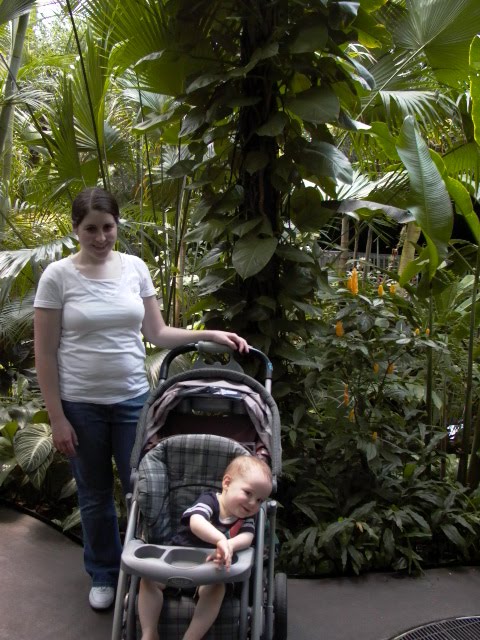
One thing that many people may not realize about this common house plant it that it can grow quite large and the leaves can get as large as 30 cm (12 in.) across. Here is a picture of another pothos plant that I saw at the NC Zoo.

It's growing all over the tree in the center of the picture. Here are some other pictures for scale.


Compare that with the size of the typical house plant (same pen).

Sunday, May 30, 2010

Warning Signs at the NC Zoo

...and the reason why they posted the last one...
...yeah that's all they do.

Saturday, May 29, 2010

Book of Mormon Place Names in New York?

There is a theory out there about how Joseph Smith came up with some of the place names in the Book of Mormon by copying (and changing slightly) a few town names from around where he lived in New York. I have heard this theory mentioned a few times but I have never had anyone actually offer a list of the names in the Book of Mormon and the corresponding place names in New York, that is until I happened to be reading some of the comments posted by readers after an opinion piece in The Deseret News.

There was one comment that mentioned this theory and actually offered a list of corresponding names in the Book of Mormon and the supposed town name in New York that it was derived from. This got me interested so I started looking up some of the names on the list (the New York list) to see where they came from. It very quickly turned into a very amusing search. Here is what I found.

First the list:

Book of Mormon place name: New York place name

Alma : Alma Mounatin [sic]
Angola : Angola
Antum : Antum
Anti-Anti : Antioch
Boaz : Boaz
Comner : Conner
Ephraim : Ephrem
Helam : Hellam
Jacobugath : Jacobsburg
Jerusalem : Jerusalem
Jordan : Jordan
Kishkumen : Kishkimineta
Lehi : Lehigh
Manti : Mantua
Moroni : Monroe
Minon : Minoa
Morianton : Moraviantown
Moron : Morin
Noah : Land of Noah Lakes
Onidah : Oneida
Onidah : Hill Oneida Castle
Omner : Omer
Ramah : Rama
Ripliancum waters : Ripple Lake
Sidom : Sodom
Shilom : Shiloh
Land of Midian : Land of Midian
Teancum : Tenecum

Of the 345 proper nouns (place names, personal names etc.) in the Book of Mormon, this guy could only come up with 28 that might be derived from place names near by to where Joseph Smith grew up (though he does throw out the rather weak "Here are just a few examples" but let's play along and look at his "few examples"). Granted the 345 number includes names such as: Sam, Jerusalem, Sarah, Babylon, Eve and many more, but even if we account for those names there are still ~200 unique proper nouns in the Book of Mormon. Even still, the list provided by this guy includes nine biblical names that Joseph Smith would not need to copy from nearby place names in order to "make them up". Of these nine names we can eliminate five of them (Boaz, Jerusalem, Jordan, Noah and Land of Midian), because there is no difference (or very little difference) between the Book of Mormon name and the corresponding "New York" name. I am keeping the rest of them because the names are either spelled different, or are different enough that they warrant looking into.

So let us look at what we have so far. The basis of the theory is that Joseph Smith derived place names in the Book of Mormon from the names of towns or other places around where he grew up in New York. Only 28 names are offered as being candidates for copying by Joseph Smith. This leaves 317 names that need to come from some place else. If we eliminate biblical names that leaves us with 23 (19) on his list and ~200 names in the Book of Mormon (with the four interesting names that I will address). The man posting this list did not offer any verification, source or explanation. He just ended with, "If one were to calculate the odds of this just being a coincidence, it would be astronomical." So let us look into these "astronomical odds". First I should mention that the Book of Mormon was published in 1829.

Starting at the top of the list:

Alma : Alma Mounatin [sic]

There is a place called Alma Mountain (or more commonly called Alma Hill) in Allegany County in New York. The hill is associated with the nearby town of the same name. It is not clear which one was named first, the hill or the town, but in any event the area was first settled in 1833 and the town was officially named in 1854. Prior to 1854 the area was associated with the town of Willing.

OK this is not starting out so good. The place now called Alma, New York which is in the general vicinity of Palmyra, New York (only about 100 miles away), was settled in 1833, about four years after the Book of Mormon was published. It may not have been named Alma until 1854. But let us continue and maybe our guy will be lucky.

Angola : Angola

From Wikipedia, "The community was previously called "Evans Station." In 1854 or 1855, a post office was established there, bearing the name Angola. The first postmaster was John H. Andrus, who later became county clerk. At this time, the community's name was changed to "Angola." The new name was apparently chosen because, at that time, local residents (primarily Quakers) were supporting missionary efforts in the Portuguese colony of Angola in Africa."

This is not looking so good for this theory. Perhaps we should continue.

Antum : Antum

I could not find a location named Antum in New York (or Pennsylvania either). Perhaps a more though historical place name search is needed, but based on the previous two examples it may not be worth it.

Anti-Anti : Antioch

Antioch is a well known biblical name (and one of the four that I chose to keep from the nine biblical names) so it would not be surprising that it would show up, except for one thing, Antioch does not appear in the BoM. The proposed corresponding name to Antioch is Anti-Anti, which also does not appear in the BoM, though there is an Ani-Anti (along with Antiomno, Antion, Antionah, Antionum, Antiparah, Antipas and Antipus). But let us look for Antioch anyway. I was able to find several churches in New York City named after Antioch, but no town or hill or place name.

Comner : Conner

Try as I might, I could not find a Conner, New York. (also, there is no Comner in the BoM, but there in a Comnor).

Ephraim : Ephrem

Here is another overtly biblical name, but still let us look for Ephrem, New York.... and nothing.

Helam : Hellam

I could not find a Hellam, NY but there was a Hellam, PA which might be a possibility. It was named in the 1700's so it might just work. But it is quite a ways away from Palmyra (it is in southern Pennsylvania), which is central to the original theory, that ALL BoM names came from place names close to Palmyra.

Jacobugath : Jacobsburg

I could not find a Jacobsburg, NY but there was a Jacobsburg, OH.

Kishkumen : Kishkimineta

This was my favorite, because the only place Kishkimineta turned up in a Google search was in this guy's comment on the Deseret News site. And now that I have a post including it, this post will eventually turn up in a Google search about Kishkimineta. Kishkimineta. Just messing with the Google robot. Kishkimineta. I bet if I include Kishkimineta enough times in this post I can make this post higher rated in the Google search returns than the original comment. Kishkimineta.

Kishkimineta.

Lehi : Lehigh

Yes there is a Lehigh, NY. Could not find any information about it. It is closer to Palmyra than previous towns found in NY. No information as to when it was named. I'll put this down as a definite unverified maybe. Kishkimineta.

Manti : Mantua

There is a city in Italy named Mantua. Couldn't find a place in NY by that name.

Moroni : Monroe

There is a town named Monroe in NY, and it was named in 1818! So far this is the best candiatate. Still you have to get Moroni from Monroe...Kishkimineta.

Minon : Minoa

This is GREAT! There is a town named Minoa in New York. Perfect... OK, looking, looking, Oh! the official town website. Seems like a nice place. OK let's find out the history of Minoa. From the town website:

"Did you know that from the first settlers here in the early 1800's, this was called Manlius Station? It is told that in 1895 Dr. Arthur B. Rood (a physician in town in the late 1800's until 1914) was tired of having his mail ending up in Manlius, Manlius Center, North Manlius, Manlius Four Corners, and the Town of Manlius, that he decided a name change was the answer and was instrumental in the renaming of our village, Minoa."

Hmmmm....1895. Not good. Kishkimineta.

Morianton : Moraviantown

I could not find a Moraviantown, but there is a Moravia, NY. From Wikipedia, "The first settlers arrived around 1789, while the natives still lived in the area. The town was formed in 1833 from the Town of Sempronius." (Fun fact!: The town of Moravia was the boyhood home of Millard Fillmore, John D. Rockefeller and John Wood.)

Moron : Morin

Could not find a Morin, NY.

Onidah : Oneida

There is an Indian tribe called the Oneida. And there is a town in New York called Oneida, which got its name from the Oneida community, which was founded in 1848, four years after Joseph Smith died. The best bet here is the Indian tribe (see below)

Onidah Hill : Oneida Castle

Oneida Castle was the last location of the independent Oneida tribe. It is located just east of the city of Oneida, and was probably the inspiration for the name of the community and city. So far this is the best candidate (even better than Monroe).

Omner : Omer

I can't find an Omer, NY, but omer is a biblical term (though not too common).

Ramah : Rama

I couldn't find a Rama, NY (but plenty of Sport-o-rama, Disc-o-rama, Wood-o-rama, Groom-o-rama and Sign-a-rama's). Rama is a Hindu deity, but not very likely an influence on Joseph Smith. Kishkimineta.

Ripliancum (waters) : Ripple Lake

I found a Ripple Lake in Minnasota, Texas and Massachusetts, but not New York.

Sidom : Sodom

Sodom is a well known place name in the bible (and not associated with the best things) so I was supprised when I actually found a Sodom, NY. Though I couldn't find much else.

Shilom : Shiloh

Shiloh is another biblical name, which if Joseph Smith was making up names he would not need to borrow this name from a nearby town. As it is, I can't find a Shiloh, NY.

Teancum : Tenecum

On this one I looked long and deep. Still I could not find a Tenecum, NY. Apparently there was a Dutch colony of the same name in modern day Pennsylvania, but it seems to have been renamed when taken over by the British. There is still a creek and an island of the same name in PA.

So let us recap. Of the 28 names offered, we eliminated five because of their prominent biblical source, and we can assume that Joseph Smith did not need any inspiration from local towns named after those five (for those that are interested, the five are Boaz, Jerusalem, Jordan, Noah and Midian. Jerusalem and Jordan, not surprisingly, are towns in New York the other three are not). This leaves us with 23 possibilities from the list. Of those, nine were found to be actual places in New York, 14 were not. Of the nine that were found five of them were named after the Book of Mormon was published, two of them the date of their naming was uncertain and the remaining two are possible candidates for this theory. These include Monroe and Oneida Castle (I am excluding the city of Oneida, because that was named for the Oneida Community founded in 1848).

To be more thorough we would have to look at the historical place names and find out what they were called back in the 1820's to make sure, but given the verified parts of the list it may not be a particularly rewarding exercise. Even if some of the 14 unknown "town" names did prove to be historical town names around Palmyra in the 1820's, this still leaves more than 150 names in the Book of Mormon that need to be accounted for under this theory. While at first this theory may appear to be very persuasive, it steadily gets more and more ridiculous the more "pesky" facts keep intruding on the scene.

Kishkimineta.